
A commercial boiler service follows broadly the same sequence wherever the plant is installed: safety checks, combustion analysis, inspection of the burner and heat exchanger, and tests of the controls and safety devices. The pre-winter commercial heating checklist sets out what that work involves in more detail.
What changes from one building to the next is everything around that work: when the plant can be taken out of use, who needs to be told, what else depends on the boiler, and how much disruption a breakdown causes. A boiler serving a single-occupier office is a different proposition from one supplying a leisure centre’s showers or a school kitchen.
This article explains how commercial boiler servicing and commercial boiler repairs are typically planned across the main types of commercial building found in South Yorkshire and the wider region. It is written for facilities managers, estates teams and business owners who want to understand what shapes the work in their own premises.
Why does the type of building affect boiler servicing and repairs?
Three factors do most of the work.
- Occupancy pattern. Whether the building is ever empty, and when, decides when a boiler can be shut down for the parts of a service that need it off and cool.
- Dependency. Some buildings rely on the boiler for space heating alone. Others also depend on it for hot water in kitchens, washrooms, showers, pools or clinical areas, which raises the stakes of any shutdown.
- Control of the plant. A single occupier usually controls its own plant room. In shared buildings, central plant is often controlled by a landlord or managing agent, which adds people to inform and approvals to obtain.
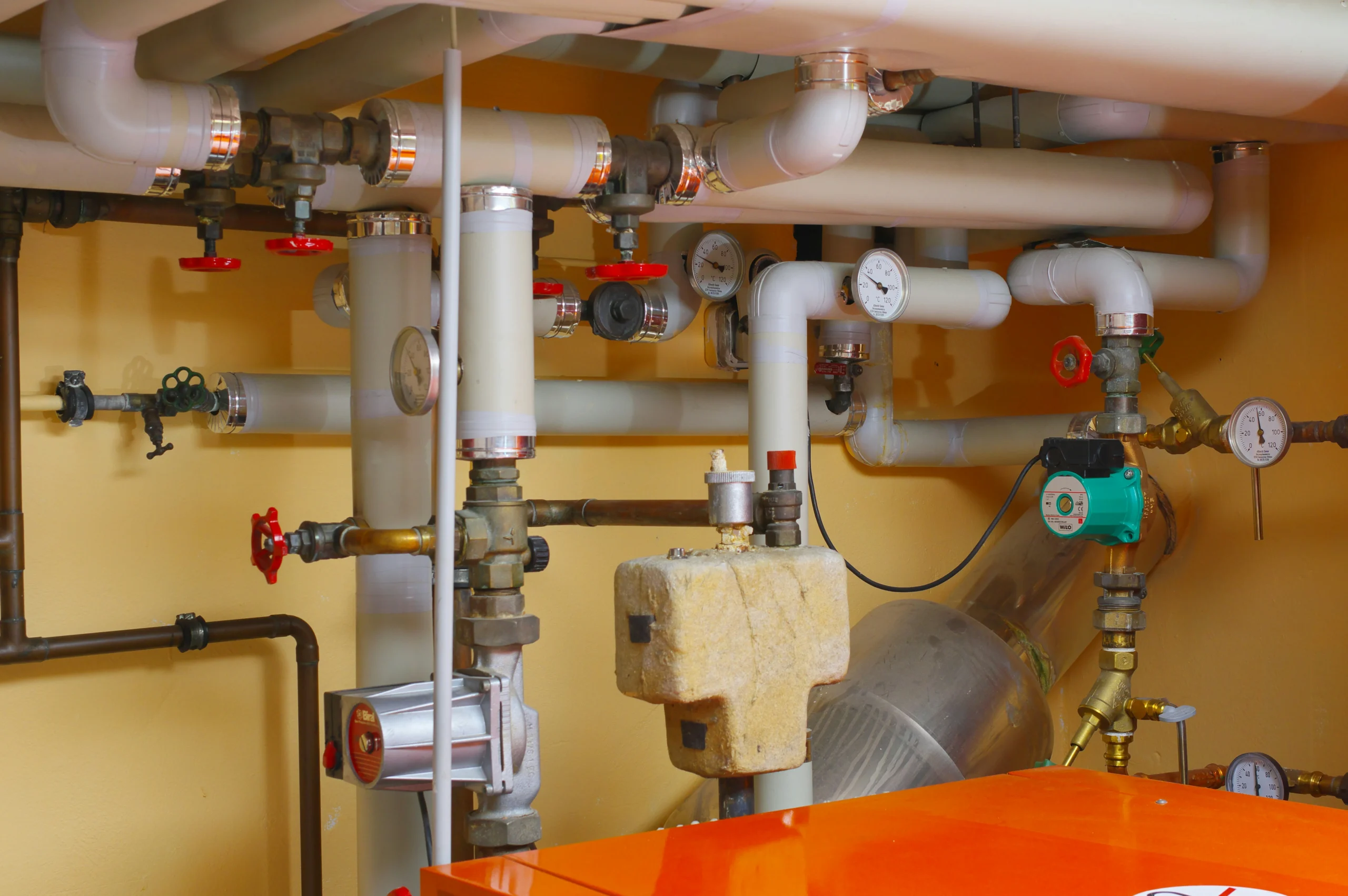
The size of the installation matters too. Many larger buildings use several boilers in a modular or cascade arrangement. Each boiler can usually be isolated on its own valves while the others keep the system running, so one unit can often be serviced, or fail, without the building losing heat altogether. How much heat remains depends on the spare capacity the system was designed with and how it is configured. A building with a single boiler has no such margin.
How is boiler servicing planned in offices and multi-tenant buildings?
In a single-occupier office, servicing is commonly arranged early in the morning, in the evening, at weekends or outside the heating season, so that the periods when the boiler is off go largely unnoticed.
Multi-tenant buildings add a layer. In many, central boilers serving the whole building are arranged by the landlord or managing agent, with costs recovered through the service charge, while plant serving a single tenant’s space may be handled by that tenant. The arrangement varies from building to building and is usually set out in the lease. Visits to shared plant rooms typically involve building management access arrangements, permits to work and advance notice to tenants of any planned shutdown.
When central plant fails in a shared building, every tenant is affected at once, and the fault is often reported through the managing agent rather than by each occupier. The page on commercial boiler servicing and repairs in Leeds looks at how access approvals and tenant communication shape the work in shared offices.
When are school boilers usually serviced?
The school year shapes boiler maintenance in education settings. The summer holidays are a common time for annual servicing because the heating is not needed and the site is quiet. They are also when much of the year’s other estate work happens, so plant room access and contractor availability can be tight, and some schools spread work across half-terms as well.
Department for Education guidance on health and safety in the school estate says that gas work must be done by a Gas Safe registered engineer with a valid certificate of competence, and describes at least annual gas safety checks of appliances and pipework as good practice. The same guidance notes that legionella growth is more likely when hot water temperatures are below 50°C, so where a school’s boilers also supply hot water, a fault can matter beyond the heating.
During term time, a breakdown can affect classrooms, kitchens, washrooms and sports changing facilities. Contractors working on school sites normally follow the school’s own sign-in and safeguarding procedures, which is part of planning any visit.
How do industrial and warehouse premises differ?
Industrial and manufacturing sites often use more than one type of heating. Production and storage areas with high ceilings are commonly heated by gas-fired warm air heaters or radiant tube heaters, while offices, canteens and welfare areas often run from a conventional wet boiler system. Each type of appliance has its own manufacturer’s maintenance requirements.
Access is a bigger factor than in most buildings. High-level heaters can require powered access equipment, and work is planned around shift patterns, vehicle movements and loading bays. Sites that run around the clock tend to line heating maintenance up with planned production shutdowns.
A heating failure on an industrial site can affect more than comfort. HSE guidance on temperature in the workplace says the minimum temperature in an indoor workplace should normally be at least 16°C, or 13°C if much of the work involves rigorous physical effort, and some processes and stored products are themselves sensitive to temperature. The page on commercial boiler servicing and repairs in Sheffield describes how work is planned around shifts and shutdown windows on workshop and industrial sites.
What changes in retail and hospitality premises?
In retail, the main constraint is trading hours, so servicing tends to happen before opening or after closing.
Hospitality premises depend heavily on hot water for kitchens, washing up, handwashing and guest facilities. Where the boiler also supplies that hot water, a fault can interrupt trading even in mild weather, and servicing is usually arranged around service times, often mid-afternoon or after closing.
Why are leisure centres and gyms a special case?
Leisure centres and gyms combine long opening hours, often seven days a week, with heavy hot water demand from showers and, in many cases, pool heating. That leaves few natural gaps for planned work, so servicing is commonly scheduled overnight or during planned closure periods, and in multi-boiler plant rooms units are often serviced one at a time to keep supply going.
Hot and cold water systems and spa pools are among the systems HSE identifies as most likely to create a legionella risk, and temperature control is a common part of how such sites manage that risk. A boiler outage at a leisure site can therefore become a water management issue as well as a heating one, depending on how the hot water system is designed and managed.
How do healthcare settings approach boiler maintenance?
Medical and healthcare premises, from GP surgeries and dental practices to clinics, look after people who may be more vulnerable both to cold and to waterborne infection. Water safety in healthcare buildings is the subject of specific guidance, including Health Technical Memorandum 04-01, Safe water in healthcare premises, and in many premises the boiler plant also produces the hot water.
Planned work is usually arranged outside clinic hours, and any shutdown is coordinated with the people responsible for water safety on site.
What makes older and extended buildings harder to service and repair?
Across South Yorkshire, many commercial premises are older buildings that have been converted or extended: former mills and works buildings, Victorian schools, and offices in period properties. Their heating systems often reflect that history.
- Mixed-age systems. A newer boiler may be connected to much older pipework, with extensions added later on separate circuits.
- Water quality. Older systems are more prone to sludge and scale, which affects how new and old components work together.
- Controls from different eras. Time clocks, thermostats and building management systems added at different times do not always work together cleanly.
- Limited records. Drawings and service histories may be incomplete, so the first visit to an older plant room often takes longer.
- Parts availability. Spares for older boilers can become harder to find, which is one of the factors in the repair or replacement decision.
Asbestos is another consideration. HSE notes that asbestos can be found in any building built before the year 2000. HSE also explains that, under the duty to manage asbestos, the dutyholder for a non-domestic building must give information about the location and condition of any asbestos-containing materials to anyone who may work on or disturb them. That is one reason engineers ask for asbestos information, often held in an asbestos register, before working in older plant rooms.
How do the main building types compare?
The table below summarises the typical patterns described above. Individual sites vary with their layout, plant and use.
| Building type | When planned work is usually arranged | What typically depends on the boiler | What a breakdown typically affects |
|---|---|---|---|
| Offices and multi-tenant buildings | Early mornings, evenings, weekends or outside the heating season; with landlord or agent approval in shared buildings | Space heating, and hot water in some buildings | Every tenant served by the central plant |
| Schools | Summer holidays, half-terms or outside school hours | Heating, and often hot water for kitchens and washrooms | Classrooms, kitchens, washrooms and changing facilities during term time |
| Industrial and warehouse premises | Between shifts or during planned production shutdowns | Heating for offices and welfare areas; production areas often have separate heaters | Working conditions, and processes or stock that are sensitive to temperature |
| Retail and hospitality | Before opening, after closing or between service times | Heating, and in hospitality hot water for kitchens and washrooms | Customer comfort and, in hospitality, kitchen operations |
| Leisure centres and gyms | Overnight or during planned closures, often one boiler at a time | Showers, space heating and, in many cases, pool heating | Showers, pools and, depending on system design, water management |
| Healthcare premises | Outside clinic hours, coordinated with whoever manages water safety | Heating and, in many premises, hot water | Patient comfort and water safety arrangements |
| Older and extended buildings | Often a longer first visit, arranged once asbestos information has been provided | Mixed-age systems and controls | Diagnosis can take longer, and parts for older boilers may be harder to source |
What information helps engineers plan a service or repair?
Whatever the building, engineers planning a visit usually ask for the same core information:
- the number, make and model of boilers and other heating appliances
- previous service reports and gas safety records
- access arrangements, site contacts and any permit-to-work requirements
- times when plant can and cannot be shut down
- which areas or activities depend most on heating and hot water
- asbestos information, for buildings built before 2000.
For a breakdown, the useful details are what has stopped working and which areas are affected. Diagnosis is a job for a suitably qualified engineer. HSE guidance for employers explains that appliances known or suspected to be unsafe should not be used, and that it is the employer’s responsibility to check an engineer is registered and suitably qualified, which can be done through the Gas Safe Register.
How do servicing and repairs fit together over the year?
Servicing and repairs are connected. Service records give an engineer the history of the plant when diagnosing a fault, and recurring faults found during repairs inform what the next service concentrates on. The article on why commercial boilers break down in winter explains the common causes of failure and what a lockout means.
Many organisations bring the two together under a planned maintenance arrangement, with scheduled visits, records and agreed response terms. The differences between that approach and calling an engineer as problems arise are covered in planned maintenance versus reactive repairs, and what a commercial HVAC maintenance contract should include looks at how such agreements are usually structured.
Frequently asked questions
Usually, yes. Parts of a service need the boiler to be off and cool, so heating and hot water from that boiler are interrupted for a period. In buildings with several boilers, units are often serviced one at a time so the others keep running.
It depends on the number and size of boilers, the condition of the plant and how easy it is to reach. A single boiler in an accessible plant room takes considerably less time than a multi-boiler installation, and engineers usually confirm timings once they know the plant.
It varies, and is usually set out in the lease. In many buildings, central plant serving the whole building is arranged by the landlord or managing agent, while equipment serving one tenant’s space may be handled by the tenant.
The summer holidays are a common time for annual servicing, but not the only one. Some work is arranged in half-terms or outside school hours, and breakdowns during term time are dealt with as they arise.
HSE explains that the duty to manage asbestos requires the dutyholder for a non-domestic building to share information about the location and condition of asbestos-containing materials with anyone who may disturb them. Older plant rooms are among the places where asbestos-containing materials may be present.
If a fault makes an appliance unsafe, the engineer makes the situation safe, which can mean isolating the boiler, and explains the findings. Where parts need ordering or a longer outage is expected, other boilers in the plant room may carry the load, and temporary heating plant can be hired in for extended repairs or replacements.