
Ask three commercial HVAC contractors to quote for maintenance on the same building and you will get three documents that look broadly similar and mean entirely different things. One includes filters. One counts them as consumables. One will attend a breakdown within four hours; another promises “priority response” without saying what that means.
For a facilities manager, that makes comparison almost impossible — and it is usually why the cheapest quote turns out not to be the cheapest contract. This guide sets out what a commercial HVAC maintenance contract should actually specify, so you can hold every quote to the same standard.
What should be in the asset register?
Nothing else in the contract works without this, and no contractor can price maintenance properly without knowing what they are maintaining. If a quote arrives before anyone has walked the site, it is an estimate dressed up as a proposal, and it will be revised the first time an engineer opens a plant room door.
A proper asset register should record, for every item of plant:
- Make, model and serial number
- Location and access requirements — roof, ceiling void, locked riser, permit needed
- Age and condition, with an honest note on remaining service life
- Refrigerant type and charge weight, for anything using refrigerant
- Any existing fault history or known workarounds
That last point matters more than it sounds. Inherited buildings are full of systems that technically work because somebody bypassed something a decade ago. You want that written down before it becomes your problem.
How often should commercial HVAC plant be serviced?
A flat “two visits a year” across a mixed estate is a convenience for the contractor rather than a specification. Different plant needs attention at different intervals, and the contract should say so asset by asset.
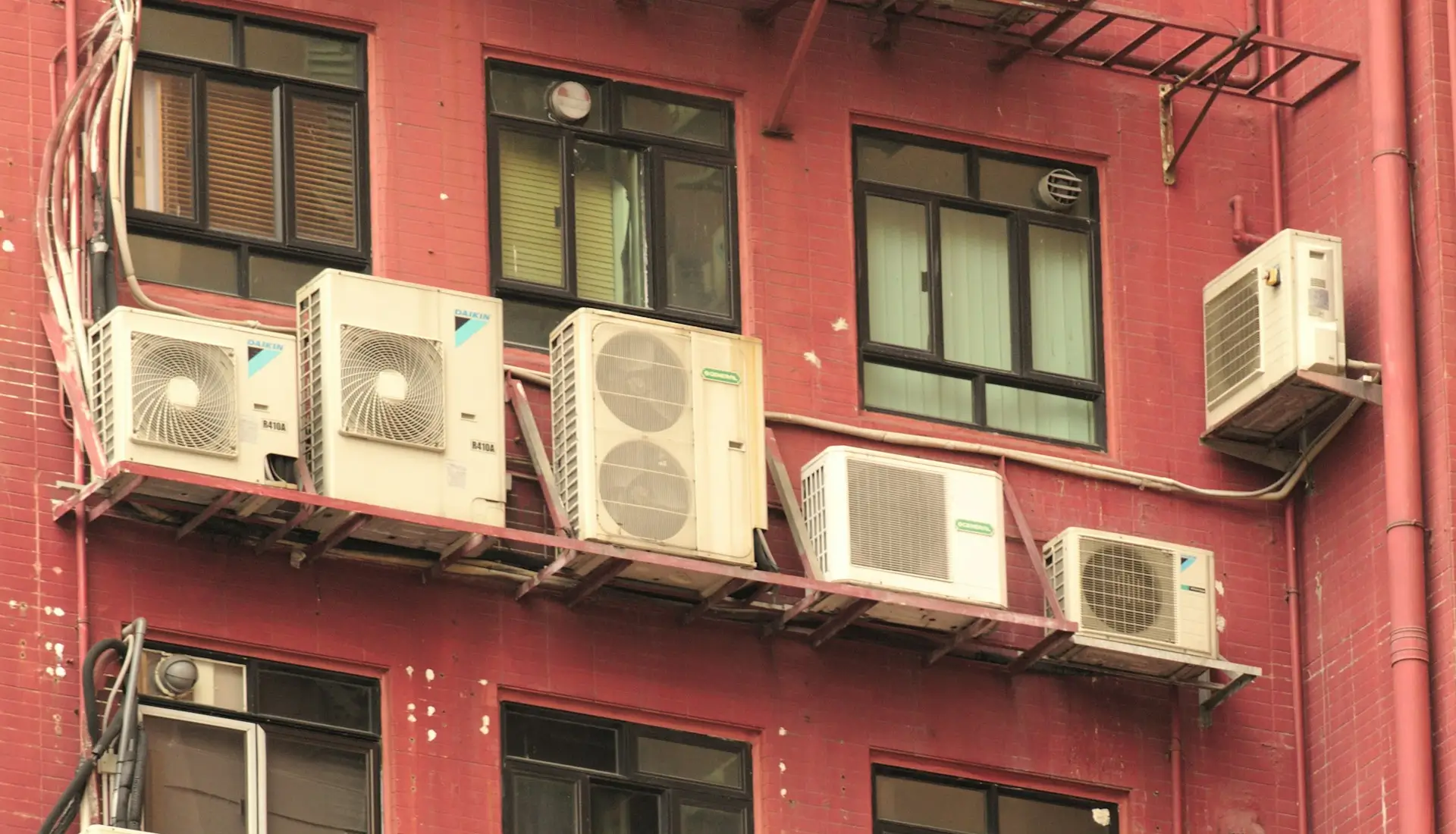
Split and VRF air conditioning in a busy office typically needs more frequent attention than the same equipment in a lightly used meeting room. Kitchen extract in a working restaurant is on a different cycle again. A gas-fired boiler serving a school has a heating-season rhythm that has nothing to do with the calendar year.
Ask for the reasoning behind the frequency. A contractor who can explain why a particular unit is on a quarterly cycle understands your building. One who cannot is applying a template. We have set out what a sensible air conditioning regime looks like in more detail in our facilities manager’s guide to commercial air conditioning maintenance.
What should a maintenance visit actually include?
This is the part most often left vague, and the one that most affects value. “Service and inspect as per manufacturer recommendation” is not a scope of work — it is a way of avoiding writing one.
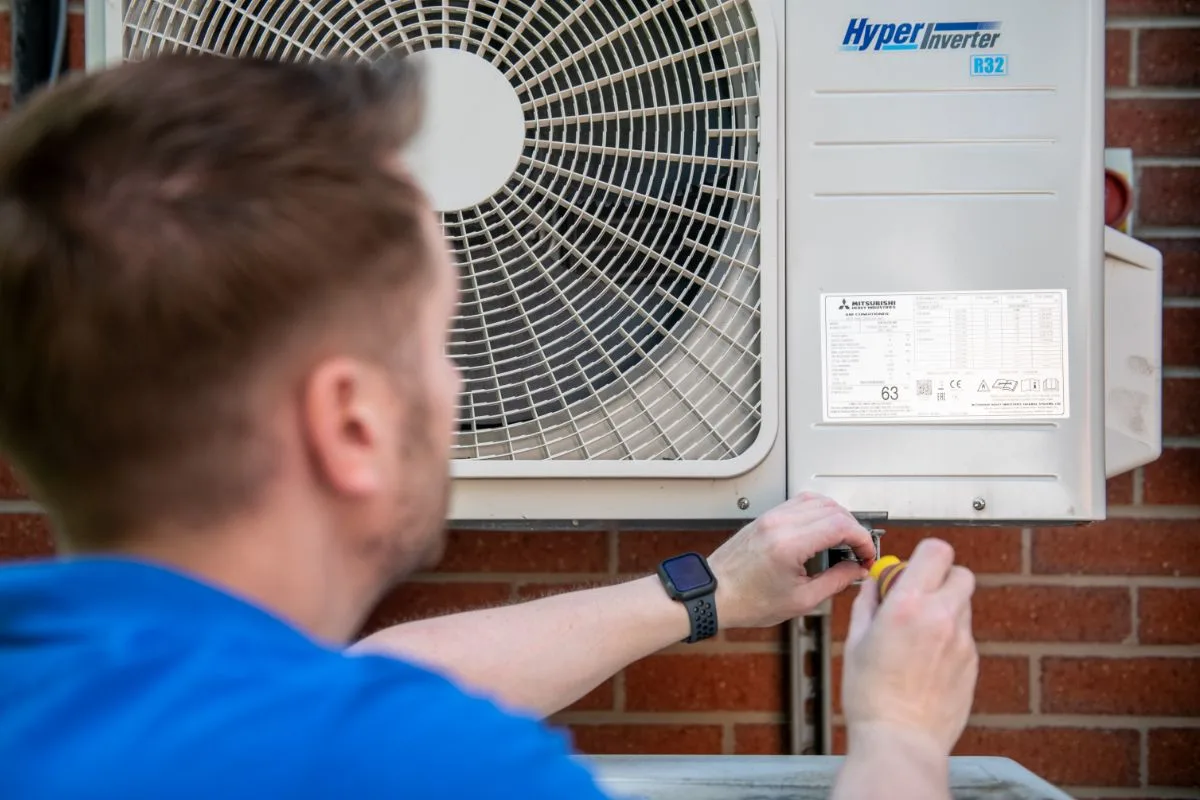
For air conditioning and refrigeration systems, expect the task list to name filter cleaning or replacement, coil condition, condensate drainage, refrigerant pressures and superheat, electrical connections and current draw, controls operation, and fan and bearing condition.
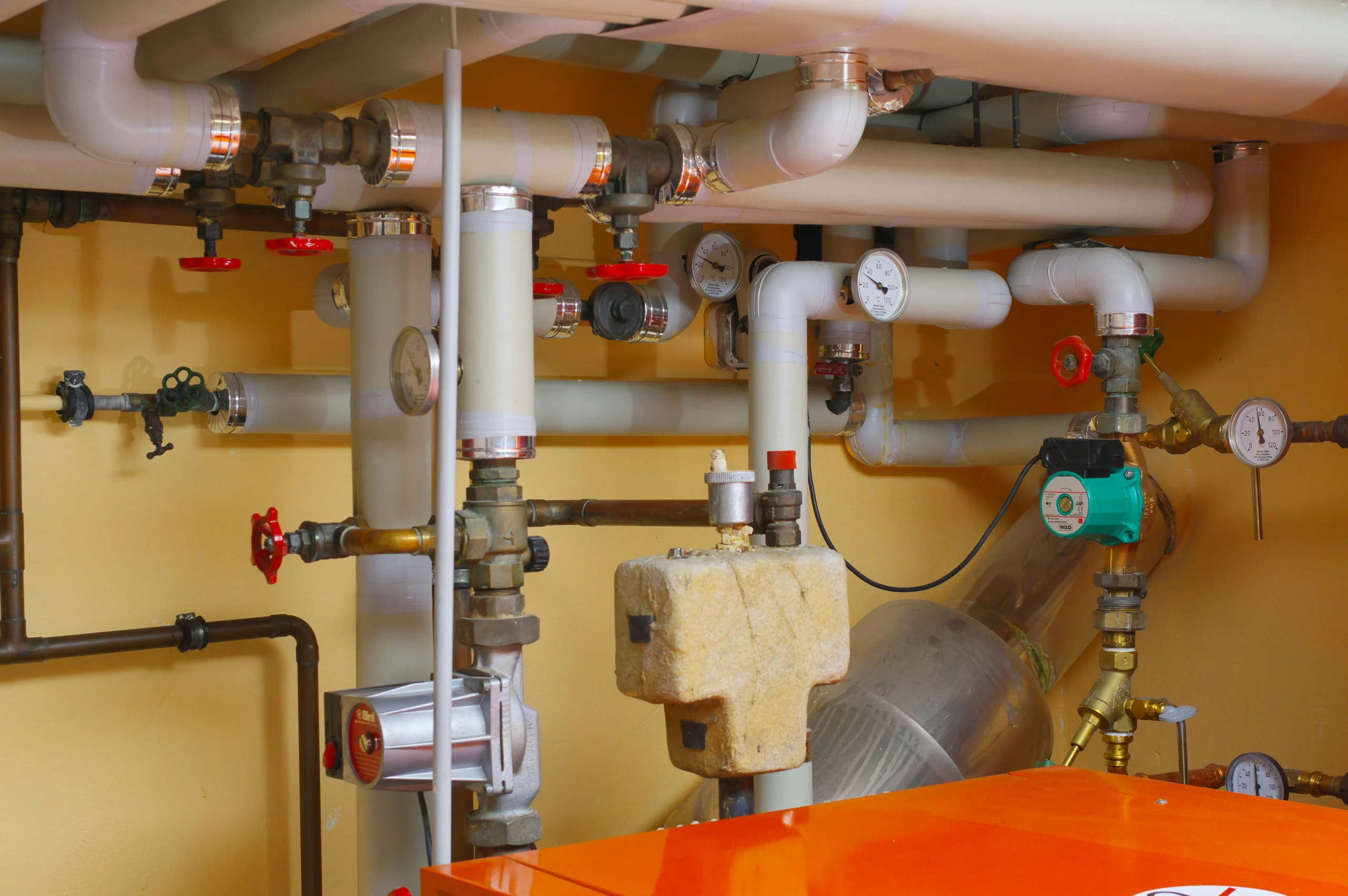
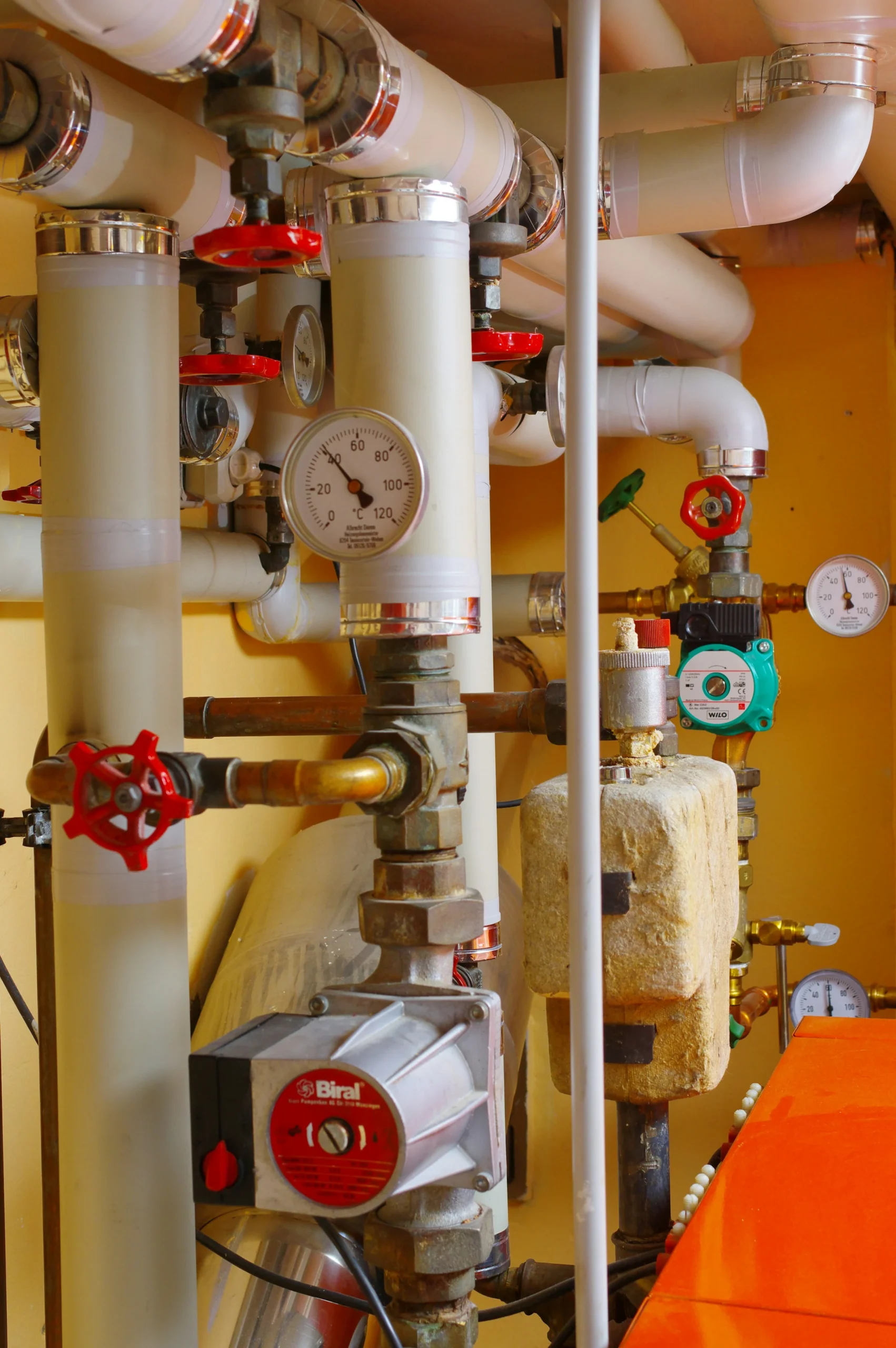
For heating plant, expect combustion analysis with recorded readings, flue integrity, gas soundness, pump and valve operation, expansion vessel charge, controls and interlocks, and system water quality. Most boiler failures announce themselves well before they happen — we have listed the seven warning signs worth acting on separately.
If those readings are being taken, they should be recorded. Trending combustion efficiency or refrigerant pressures across visits is how you spot a system degrading before it fails, and it is the main reason planned maintenance works out cheaper than reactive repair over a building’s life.
What compliance work does a maintenance contract cover?
A maintenance contract and a compliance contract are not the same thing, and the difference is where disputes start. Get it in writing which statutory obligations the contract discharges and which it simply flags.
F-Gas leak checking
Systems containing fluorinated refrigerants must be leak checked at intervals set by the CO₂ equivalent of the charge, with records kept for each system. Larger charges require more frequent checks, and fitting automatic leak detection extends the permitted interval. The Environment Agency sets out the duties in GOV.UK’s F gas guidance for users, producers and traders.
The contract should state which of your systems fall in which band, who holds the records, and who produces them on request. It is also worth confirming that the engineers attending hold the right category of F gas certification for the work — GOV.UK publishes which qualification covers which activity, and company certification is a separate requirement from individual certification.
Gas safety
Commercial gas appliances must be maintained in a safe condition by a Gas Safe registered engineer working within the correct commercial categories. Domestic registration does not cover commercial catering, plant room boilers or large-output appliances. Ask to see the registration card and check the categories against your equipment, not just the company’s registration number.
TM44 air conditioning inspections
Air conditioning systems above a threshold effective rated output require periodic inspection by an accredited energy assessor, with the report lodged on the national register — and separate units under one person’s control are counted together, which catches out more buildings than people expect. MHCLG’s guide to air conditioning inspections in buildings explains how the threshold and the five-year cycle work.
This is a separate accreditation from F-Gas work, so your maintenance contractor may or may not be able to carry it out. Either is fine — what matters is that the contract is explicit about it, rather than leaving you to discover the gap at renewal.
Water systems and ventilation hygiene
Depending on the building, Legionella risk assessment and control, and kitchen extract cleaning to recognised ductwork hygiene standards, may sit alongside HVAC maintenance. They are frequently handled by different specialists. The contract should say clearly whether they are in scope, out of scope, or subcontracted.
What response time should the contract guarantee?
“Rapid response”, “priority attendance” and “24/7 cover” are marketing terms until somebody attaches numbers to them. A response commitment is only meaningful if it states:
- The clock start — when you report the fault, or when it is triaged
- Attendance time on site, in hours, and whether that differs in and out of business hours
- What happens at holidays and weekends
- Whether response means attendance or resolution — these are very different promises
- What the contractor does if a part is on lead time — temporary heating or cooling, or nothing
It is also worth asking how many engineers cover your area and how the out-of-hours rota works. A four-hour commitment backed by one on-call engineer across three counties is a number, not a capability.
What is usually excluded from an HVAC maintenance contract?
Read the exclusions before the scope. They tell you more about a contract than the inclusions do. The common ones worth checking:
- Parts and materials — included, discounted, or charged at list
- Consumables such as filters, belts and refrigerant top-ups
- Labour on breakdowns — covered under the contract rate or charged separately
- Out-of-hours call-out rates and minimum charges
- Access equipment — who pays for scaffolding, MEWPs or roof access
- Plant replacement, and the point at which a repair becomes a capital item
- Systems installed by others, or plant already at end of life at contract start
None of these are unreasonable exclusions. The problem is only ever discovering them in an invoice rather than in the contract.
What reporting should you receive after each visit?
Between visits, the documentation is what you are actually buying. If an engineer attends, does excellent work, and leaves a handwritten docket that never reaches you, you have paid for maintenance and received nothing you can use.
A contract should commit to a service report per visit with recorded readings, an updated asset condition summary, a log of open remedials with recommended timescales, and compliance certification filed somewhere you can retrieve it at short notice. If you are preparing for an insurance inspection, a lease event or a tender submission, that file is what you will be asked for.
What drives the cost of a commercial HVAC maintenance contract?
We are not going to put a figure on this page, because any number would be invented. A three-storey office with four split systems and a single boiler sits in a completely different place to a manufacturing site with rooftop AHUs, process cooling and a commercial kitchen. What we can do is tell you what moves the number, so you can read a quote properly:
- Asset count and type — rooftop and process plant costs more to maintain than wall-mounted splits
- Visit frequency across the estate
- Access difficulty, permits, and whether work must happen out of hours
- Age and condition of plant at the start of the contract
- How much statutory compliance work sits inside the contract
- Response commitment — a guaranteed attendance window costs more than best endeavours, because it has to be resourced
- Whether parts, consumables and breakdown labour are included or excluded
When two quotes differ significantly, the cause is almost always one of those seven lines. Find which one, and you will usually find that the cheaper quote is not cheaper — it is smaller.
Questions to ask before you sign
- Has anyone surveyed the site, or is this priced from a schedule I supplied?
- Which of my statutory obligations does this contract discharge, and which does it only flag?
- What is the attendance commitment in hours, and what happens out of hours?
- Are parts, consumables and breakdown labour in or out?
- What documentation will I receive after each visit, and where is it stored?
- What is the notice period, and what happens to my records if I leave?
That last one catches people out. Your asset register and compliance history should belong to you, not to whoever maintained the building last year.
The short version
A commercial HVAC maintenance contract is worth what it specifies. Ask for an asset register built from a site walk, visit frequencies justified asset by asset, a named task list with recorded readings, an explicit split between compliance work included and compliance work merely flagged, an attendance commitment in hours, and a written list of exclusions.
If a quote will not commit to those things, it is not cheaper than one that does. It is smaller, and the difference will appear later as invoices.
Frequently asked questions
A PPM (planned preventive maintenance) contract schedules servicing at set intervals to reduce the chance of failure. A breakdown or reactive contract covers attendance when something goes wrong. Many commercial contracts combine the two, but the balance varies widely. Check which you are being offered, and whether breakdown labour and parts are included or charged separately.
Under the F-gas rules, the legal responsibility sits with the operator of the equipment, usually the person or organisation with practical control over it, rather than with the contractor. A maintenance contractor can carry out the leak checks and keep the records on your behalf, but the duty to make sure they happen remains yours. The contract should state clearly who does what.
One contractor across heating and cooling can simplify reporting and compliance tracking, and it avoids gaps where responsibilities meet, such as shared controls. It only works if the contractor holds the right certifications for both: Gas Safe registration in the relevant commercial categories for heating, and F-gas certification for refrigerant work. If they don't, separate contracts with clearly defined boundaries are the safer option.
Terms vary between contractors. Annual contracts are common, and some run for longer. Whatever the term, check the notice period, how renewal works, how prices change at renewal, and what happens to your asset register and service records if you move to another contractor.
It can be quoted, but the price is only as reliable as the information behind it. Without a survey the contractor is working from an assumed asset list, and the price is likely to change once engineers find plant that wasn't listed or access that is harder than expected. A survey-based quote is easier to compare with others and less likely to be revised later.
Not automatically. A contract can carry out and record specific compliance tasks, such as gas safety maintenance or F-gas leak checks, but it only covers the obligations it names. Other duties, such as legionella control or ventilation hygiene, may sit with different specialists. Ask for a list of which obligations the contract discharges and which it only flags for you to arrange.