
How to spot problems early and avoid unnecessary disruption
If you run an office, school, warehouse, retail unit, or hospitality venue, your commercial boiler is easy to overlook until something goes wrong. A breakdown can mean uncomfortable working conditions, disruption to operations and, during colder weather, a much more urgent problem.
The good news is that commercial boilers often show warning signs before they fail completely. Recognising those signs early can give you more time to investigate the cause, plan a repair and avoid turning a manageable fault into an emergency.
Here are seven signs that your commercial boiler may need attention.
1. Strange Noises Coming From the System
A healthy commercial boiler should generally operate with a consistent background sound. If you start hearing banging, kettling, whistling, gurgling or other unusual noises, the system should be investigated.
Different noises can have different causes. Kettling, for example, can occur when deposits build up on a heat exchanger and restrict water flow. Other noises can be associated with trapped air, pumps, valves or circulation problems.
The important point is not to ignore a new or worsening noise. Identifying the cause early may help prevent further wear and reduce the risk of a more serious failure. Our commercial boiler servicing team can investigate and diagnose the cause.
2. Inconsistent Heating Across the Building
Cold spots in one office, a meeting room that never quite warms up, or radiators that are much hotter in one part of a building than another can indicate a problem with the heating system.
Possible causes include circulation problems, a failing pump, faulty valves, sludge or other restrictions in the system. In some cases, the boiler may also be struggling to meet the building's current heat demand.
Uneven heating is more than a comfort issue. In a workplace, persistently cold areas can affect staff comfort and the usability of parts of the building — the HSE sets out minimum workplace temperature expectations that employers should be aware of. It is therefore worth investigating changes in heating performance rather than simply turning thermostats up.
3. Rising Energy Bills Without a Clear Reason
If gas consumption is increasing even though the building's occupancy, operating hours and heating requirements have not changed significantly, the heating system is worth investigating.
As components age or become less effective, a boiler and heating system may require more energy to deliver the same useful heat. Poor controls, incorrect settings, circulation problems and other system issues can also contribute to unnecessary energy use. The Energy Saving Trust notes that heating typically accounts for a significant share of a commercial building's energy costs, so even a modest drop in efficiency can add up quickly.
Before assuming that higher bills are simply the result of energy prices, compare consumption with previous periods and consider whether the building's heating performance has changed. A service, inspection or system assessment may identify an issue that is affecting efficiency.
4. The Pilot Light Keeps Going Out or the Flame Looks Abnormal
Older gas-fired systems with pilot lights can provide an obvious warning when the flame repeatedly goes out. Possible causes include a faulty thermocouple or problems affecting the flue, ventilation or gas supply.
Flame appearance can also provide a warning, but it should not be used as a diagnosis. An unusual, unstable or incorrectly coloured flame can indicate a combustion problem and should be investigated by a suitably qualified gas engineer.
If you suspect a combustion or gas-related fault, do not attempt to repair or adjust the appliance yourself. Treat it as a safety issue and arrange for a competent, appropriately registered engineer to investigate it. Our engineers are fully Gas Safe registered, and any suspected combustion fault is treated as a priority, not a routine booking.
| CRITICAL SAFETY WARNING: CARBON MONOXIDE ALARMS |
5. A Carbon Monoxide Alarm Activates
A carbon monoxide alarm activating near a gas-fired heating system should never be ignored or treated as a routine maintenance issue. Carbon monoxide is colourless and odourless, so an alarm can provide an important warning that cannot be detected by sight or smell.
If a carbon monoxide alarm sounds, follow your site's emergency procedures, move people away from the affected area and seek professional assistance immediately. Do not attempt to restart or continue operating equipment that may be unsafe.
It is vital to ensure that any required carbon monoxide detection is present, operational, and regularly tested. Detection is one part of a wider approach to gas safety; it does not replace proper installation, servicing, and inspection. CO-Gas Safety, a UK charity dedicated to carbon monoxide awareness, publishes clear guidance on symptoms and what to do if you suspect an issue.
6. Frequent Pressure Loss or Fluctuating Pressure
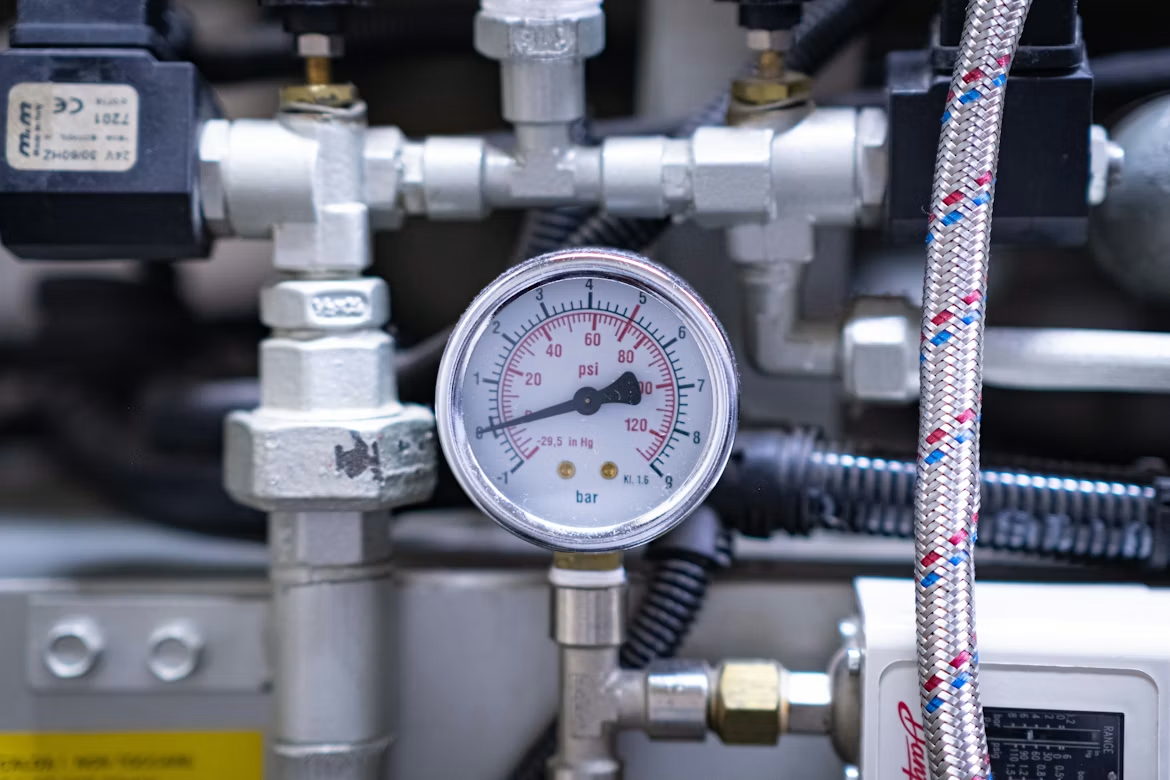
The pressure gauge can provide a useful early indication that something is not working as it should. If system pressure repeatedly falls, or the gauge fluctuates significantly without an obvious explanation, the cause should be investigated.
Potential causes can include water loss, leaks, a pressure relief valve problem or an issue with the expansion vessel. The exact cause depends on the design of the heating system and should be established rather than repeatedly topping up the system without investigation.
Pressure problems can eventually lead to boiler lockouts or loss of heating. What begins as an intermittent issue can therefore become a much more disruptive problem if it is left unresolved. If wider plumbing issues are contributing to the fault, our commercial plumbing team can look at the system as a whole rather than treating the boiler in isolation.
7. The Boiler Is Simply Getting Old
Age alone does not mean a commercial boiler needs replacing, but an older system deserves closer attention. A boiler's useful life depends on its design, operating conditions, workload, maintenance history and the availability of replacement parts.
As equipment ages, breakdowns may become more frequent, components can become harder to source and efficiency may fall. The wider heating system and its controls may also need attention, even if the boiler itself continues to operate.
If a boiler is approaching the later part of its expected service life, it can be useful to compare the likely cost and reliability of continued repairs with the longer-term implications of replacement. That decision should consider more than the initial purchase price, including energy use, maintenance, downtime, controls and the expected remaining life of the existing equipment. Our commercial boiler installation team can talk through the options.
Why Acting Early Matters
A commercial heating problem rarely becomes more convenient by being ignored. Small changes in noise, temperature distribution, energy consumption, pressure or boiler performance can provide useful early warnings.
Acting on those warnings gives a business more options. It may be possible to investigate and repair a relatively contained fault before it develops into a larger failure. It also gives facilities and building managers more opportunity to plan maintenance and replacement work rather than dealing with an unexpected breakdown.
Autumn is the natural point to do that. Our pre-winter heating checklist covers what a full system check should include before the heating season starts. For the faults that cold weather tends to expose, from frozen condensate pipes to pump and control failures, see why commercial boiler breakdowns happen in winter.
Routine Commercial Boiler Inspection Checklist
These checks serve as early indicators to help building managers recognise performance changes. They are meant to complement — not replace — professional servicing and qualified engineer inspections.
| Check Item | Focus Area | Recommended Frequency |
| System Pressure Gauge | Monitor for sudden drops, repeated loss, or unusual fluctuations. | Weekly |
| Operational Noise | Listen for new or worsening banging, kettling, whistling, or gurgling. | Weekly |
| Building Heat Distribution | Check for cold spots, uneven radiator temperatures, or underheated rooms. | Weekly / Monthly |
| CO & Safety Alarm Status | Verify alarms are powered, functional, and uninhibited. | Monthly |
| Energy Consumption | Compare gas usage against historical data for unexplained spikes. | Monthly |
| Pilot Light & Flame | Inspect for abnormal flame colour, instability, or frequent outages (if applicable). | Monthly |
| System Age & Service Logs | Review repair history, component availability, and overall equipment age. | Bi-Annually |
Frequently asked questions
If it is safe to do so, turn off the gas supply at the emergency control valve and call the National Gas Emergency Service on 0800 111 999 (for LPG, contact your supplier). Don't operate electrical switches, open doors and windows, and evacuate the building if in doubt. Don't turn the supply back on until a Gas Safe registered engineer has dealt with the leak.
A new noise isn't always a sign of danger, but it shouldn't be ignored. Kettling, banging or gurgling usually point to scale, air or circulation problems that get worse over time and can lead to a breakdown, so arrange for an engineer to investigate. If the noise comes with a carbon monoxide alarm, a smell of gas or signs of a combustion problem, stop using the boiler and treat it as an emergency.
Repeated pressure loss usually means water is escaping from the system or the system can't hold pressure. Common causes include leaks on pipework or emitters, a faulty pressure relief valve, or an expansion vessel that has lost its charge. Topping up may keep the system running for a while, but the cause needs to be found, as the problem tends to worsen and can lead to lockouts.
On appliances where the flame is visible, a flame that is yellow, orange, lazy or unstable can indicate incomplete combustion, which may produce carbon monoxide. Don't try to adjust the appliance yourself; have it checked promptly by a Gas Safe registered engineer. Many modern boilers are room-sealed with no visible flame, so combustion problems are found through flue gas analysis during servicing rather than by eye.
Simple checks work well on a regular schedule: the pressure gauge and any new noises weekly, heat distribution weekly or monthly, CO alarms and gas consumption monthly, and repair history once or twice a year. These checks help spot changes early. They add to professional servicing by a Gas Safe registered engineer rather than replacing it.
Not because of age alone. Commercial boilers typically last fifteen to twenty-five years, depending on design, operating conditions and maintenance. The decision should weigh repair history, parts availability, efficiency, compliance and the cost of a winter outage. Our guide to commercial boiler repair or replacement explains how to make that call.