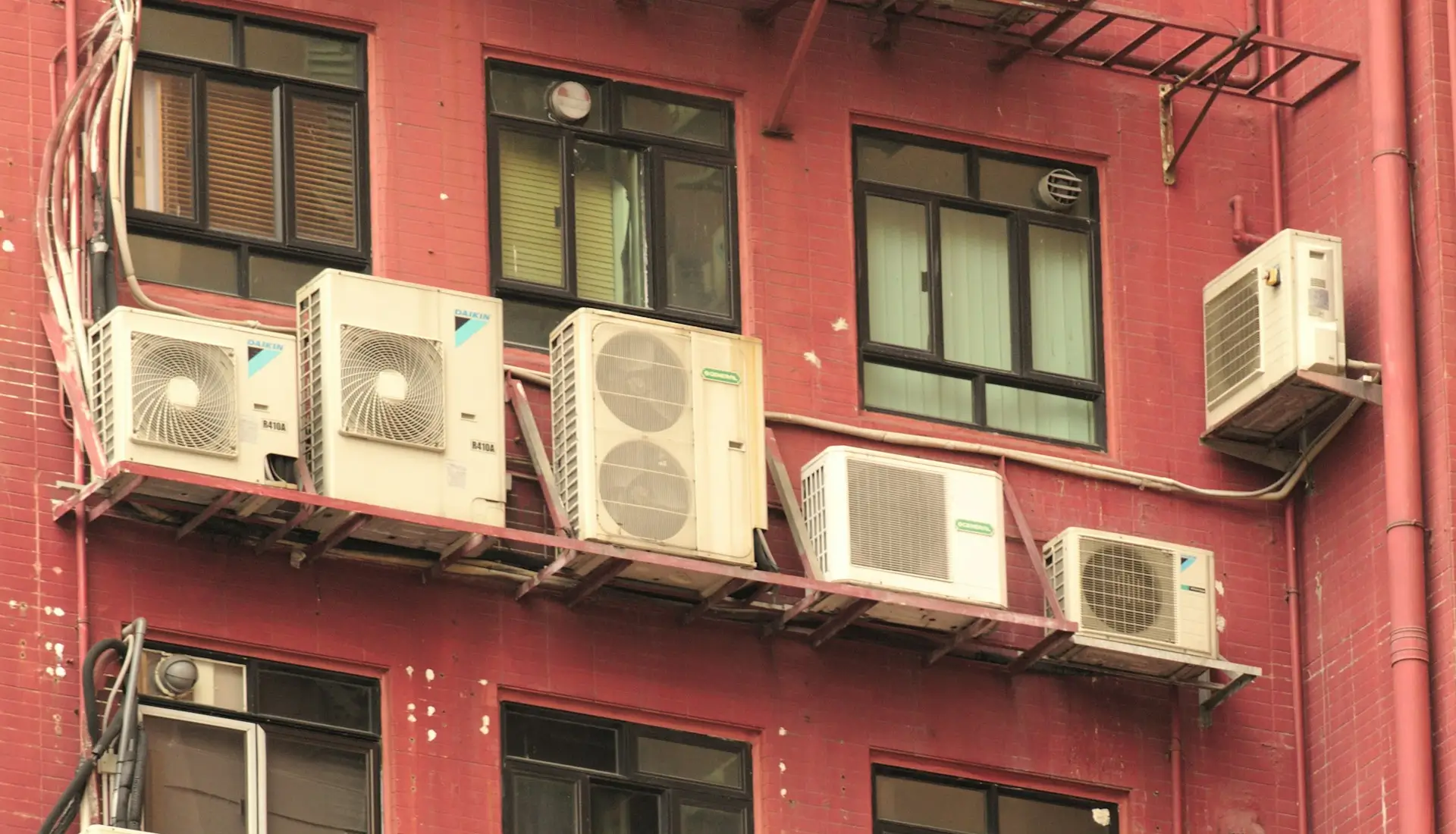

Commercial air conditioning is easy to overlook when it is working properly. When it fails, however, the impact can be immediate — particularly in offices, retail premises, healthcare facilities, manufacturing environments and buildings where temperature control is critical to operations.
Regular maintenance helps facilities managers identify developing problems before they become disruptive failures. It can also help maintain system efficiency, extend equipment life and provide better information when deciding whether equipment should be repaired, upgraded or replaced.
This guide explains what commercial air conditioning maintenance involves, how often systems should be serviced and what facilities managers should look for when managing an air conditioning estate.
Why commercial air conditioning maintenance matters
Air conditioning systems contain mechanical, electrical and refrigeration components that deteriorate over time.
Filters become dirty. Coils collect dust and debris. Condensate drains can become restricted. Fans and motors wear. Electrical connections can deteriorate. Refrigerant systems can develop leaks.
Individually, these may appear to be relatively minor issues. Collectively, they can reduce system performance and increase the likelihood of a breakdown.
Poorly maintained equipment can result in:
- Reduced cooling capacity
- Uneven temperatures
- Increased energy consumption
- Excessive noise
- Water leaks
- Unpleasant odours
- More frequent breakdowns
- Premature component failure
- Shorter equipment life
Maintenance is therefore not simply about keeping equipment clean. It is about maintaining the condition and performance of the complete system.
What does commercial air conditioning maintenance involve?
The precise maintenance requirements depend on the type of system, its age, operating environment and manufacturer's instructions.
Filters and airflow
Air filters capture dust and airborne particles before they enter the air conditioning system.
As filters become loaded with debris, airflow can become restricted. The system may then have to operate for longer to achieve the required temperature.
Filters should be inspected regularly and cleaned or replaced where necessary.
Airflow should also be considered more broadly. Changes to furniture, partitions, storage or room layouts can affect how conditioned air circulates through occupied spaces.
Coils and heat exchangers
The indoor and outdoor coils are fundamental to the operation of an air conditioning system.
Dirt and contamination reduce the ability of coils to transfer heat effectively. In outdoor units, leaves, dust and other debris can restrict airflow across the condenser.
Cleaning coils is therefore an important part of maintaining system performance.
Condensate drainage
Cooling produces condensation, which has to be removed from the indoor unit.
Drain trays, pipes and condensate pumps should be checked to ensure water can drain correctly.
A blocked condensate drain can cause water to leak from an indoor unit, potentially damaging ceilings, walls, flooring or other building equipment.
Fans and motors
Fans are responsible for moving air through the system and across the heat exchangers.
Maintenance should consider fan condition, bearings, motors, vibration, noise and general operation.
A change in the sound or vibration of a unit can sometimes provide an early indication of a mechanical problem.
Electrical components
Commercial air conditioning systems contain a range of electrical components, controls and connections.
These should be inspected as appropriate for the equipment.
Developing electrical problems can cause intermittent operation, nuisance trips or eventual system failure. Identifying deterioration during planned maintenance can therefore reduce the likelihood of an unexpected breakdown.
Controls and thermostats
A system can be mechanically sound but still perform poorly if its controls are incorrectly configured.
Thermostats, sensors, timers, control settings and zoning should be checked as appropriate.
This is particularly important where a building's use has changed since the air conditioning system was installed.
For example, an office refurbishment may have changed room layouts, occupancy levels or operating hours without the control strategy being updated.
How often should commercial air conditioning be serviced?
There is no single servicing interval that applies to every commercial air conditioning system.
The appropriate frequency depends on factors including:
- System type and size
- Manufacturer recommendations
- Operating hours
- Occupancy
- Environmental conditions
- Dust and contamination levels
- Equipment age
- The consequences of system failure
- Whether the system is critical to business operations
A small office system used intermittently will have different maintenance requirements from a large system operating continuously in an industrial environment.
Facilities managers should therefore base the maintenance schedule on the equipment and its operating conditions rather than applying the same interval to every system.
For many commercial buildings, planned maintenance before the main cooling season and again later in the year can provide a useful framework, subject to the manufacturer's requirements and the specific circumstances of the installation.
For a wider discussion of the two approaches, see Planned Maintenance vs Reactive Repairs: PPM Contracts Explained.
Planned maintenance versus reactive repairs
There are two fundamentally different approaches to maintaining air conditioning equipment.
Reactive maintenance means dealing with problems after they occur.
Planned preventative maintenance (PPM) involves inspecting and maintaining equipment at predetermined intervals to reduce the likelihood of failure.
Reactive maintenance can appear cheaper because expenditure only occurs when something goes wrong. However, the total cost of a failure can be considerably higher than the repair itself.
A breakdown may result in:
- Emergency call-out costs
- Replacement components
- Business disruption
- Loss of productive working time
- Temporary relocation of staff
- Damage caused by water leaks
- Disruption to customers or visitors
PPM does not eliminate breakdowns, but it provides an opportunity to identify deterioration before it becomes an emergency.
What are the warning signs of an air conditioning problem?
The system is taking longer to cool
If a room takes significantly longer to reach its normal temperature, there may be an issue with airflow, heat transfer, controls, refrigerant or another component.
Temperatures are becoming inconsistent
If one part of a building is consistently warmer or cooler than another, investigate whether the problem relates to the air conditioning system, controls, airflow or changes to the building.
Energy consumption is increasing
Increasing electricity consumption can have many causes, but declining HVAC efficiency should be considered where energy use rises without an obvious change in occupancy or operating conditions.
There are unusual noises
Grinding, rattling, buzzing or excessive vibration should be investigated.
Changes in noise can indicate mechanical wear, loose components, fan problems or electrical issues.
There is water around indoor units
Water leaks should not be ignored.
They can be caused by blocked drainage, condensate pump problems, frozen coils or other faults. These and other reasons for commercial air conditioning not working are explained in a separate guide.
There are persistent smells
Unusual odours may indicate contamination, drainage problems or other issues requiring investigation.
The system is repeatedly switching off
Frequent shutdowns, fault codes or circuit trips can indicate a developing problem.
How maintenance affects energy efficiency
Air conditioning efficiency is influenced by the condition of the system as well as its design.
Dirty filters and coils can restrict airflow and reduce heat transfer. Poorly maintained fans and motors can also increase the energy required to move air.
Controls are equally important.
A system operating outside its intended temperature range, running unnecessarily outside occupied hours or simultaneously heating and cooling different areas can consume substantially more energy than necessary.
Maintenance should therefore consider not only whether the equipment is operating, but whether it is operating as intended.
Facilities managers should also distinguish between maintenance-related efficiency improvements and improvements that require capital investment.
Cleaning a contaminated coil may restore lost performance. Replacing an inefficient, ageing system is a different proposition.
Maintenance and F-Gas requirements
Many commercial air conditioning systems use refrigerants covered by F-gas regulations.
The regulatory requirements depend on the equipment and refrigerant involved. Depending on the circumstances, obligations can include leak checking, record keeping and ensuring that work is undertaken by appropriately qualified personnel.
Facilities managers should maintain accurate records for relevant equipment and understand which requirements apply to their systems.
The GOV.UK guidance on fluorinated greenhouse gases provides current information on applicable requirements.
It is important not to assume that every air conditioning system has the same compliance obligations. The type and quantity of refrigerant, equipment configuration and applicable regulations all need to be considered.
What should be recorded after maintenance?
Good maintenance records are valuable beyond demonstrating that a service has taken place.
A useful record should identify:
- Equipment serviced
- Date of service
- Engineer or contractor
- Work undertaken
- Faults identified
- Components replaced
- Refrigerant-related work
- Recommendations
- Follow-up actions
- Any outstanding defects
Over time, this creates a history for each major asset.
That history can help facilities managers identify recurring problems and determine whether an individual unit is becoming disproportionately expensive to maintain.
It also provides useful evidence when preparing capital expenditure proposals.
When should an air conditioning system be repaired or replaced?
An ageing air conditioning system does not automatically need replacing.
A repair may be the most sensible option if the equipment remains reliable, efficient and suitable for the building.
Replacement becomes more compelling when several factors start to combine, such as:
- Repeated breakdowns
- Increasing repair costs
- Poor energy efficiency
- Obsolete refrigerant technology
- Difficulty sourcing components
- Declining cooling performance
- Significant corrosion
- Changes to building requirements
- Equipment reaching the end of its expected service life
The decision should therefore be based on the total cost and suitability of the system, rather than age alone.
A useful starting point is to compare the expected cost of continued maintenance and repairs with the capital cost and expected operating costs of replacement.
See When Should You Upgrade Your Commercial Air Conditioning? for a more detailed look at this decision.
What should a commercial AC maintenance contract include?
Facilities managers comparing maintenance providers should look beyond the headline number of service visits.
The important question is what those visits actually cover.
| Contract element | What to check |
| Equipment covered | The contract should identify the systems, units and locations included. This is particularly important for larger buildings and multi-site estates. |
| Service frequency | The schedule should specify how often equipment will be inspected and maintained. |
| Scope of work | The agreement should explain which inspection, cleaning, testing and maintenance activities are included. |
| Fault reporting | There should be a clear process for recording defects and communicating recommendations. |
| Repairs | Clarify whether repair work is included, charged separately or subject to agreed rates. |
| Emergency response | If the equipment is business-critical, establish what happens if a breakdown occurs between planned visits. |
| Compliance records | The contract should make clear how relevant refrigerant and maintenance records will be maintained. |
| Asset history | For larger estates, consistent records can make it easier to track the condition and performance of individual units over time. |
A practical commercial air conditioning maintenance checklist
Routine checks
- Check for unusual noises or vibration
- Check for unusual smells
- Look for water leaks
- Monitor temperature complaints
- Check for visible damage
- Record fault codes
- Review unusual changes in energy consumption
Planned professional maintenance
- Inspect and clean filters
- Inspect coils and heat exchangers
- Check condensate drainage
- Inspect fans and motors
- Check electrical components
- Check controls and thermostats
- Assess system operation
- Investigate refrigerant issues where appropriate
- Review applicable compliance requirements
- Record defects and recommendations
Annual review
- Review breakdown history
- Review repair expenditure
- Identify recurring faults
- Assess equipment condition
- Review energy performance
- Check whether maintenance frequencies remain appropriate
- Identify equipment approaching replacement age
- Consider future capital expenditure requirements
Don't manage air conditioning in isolation
Air conditioning forms part of a building's wider HVAC system.
Heating, ventilation, controls and cooling can all influence one another.
For example, changes to ventilation rates can affect heating and cooling loads. Building refurbishments can alter occupancy patterns and heat gains. New IT equipment can increase cooling requirements. Changes to room layouts can affect air distribution.
For that reason, facilities managers should consider air conditioning maintenance within the wider context of building services rather than treating each system as an isolated asset.
What facilities managers should take away
Commercial air conditioning maintenance is ultimately about managing risk, maintaining performance and making informed decisions about building assets.
A planned approach helps facilities managers identify developing problems, maintain equipment more effectively and build a reliable history of repairs and performance.
The key principles are straightforward:
- Maintain equipment before it fails.
- Follow manufacturer requirements and appropriate servicing intervals.
- Investigate changes in performance rather than waiting for a breakdown.
- Keep accurate maintenance and compliance records.
- Use recurring faults and repair costs to inform replacement decisions.
- Consider air conditioning as part of the building's wider HVAC strategy.
The objective isn't to prevent every possible failure. It is to reduce avoidable failures, identify problems earlier and ensure that decisions about maintenance, repair and replacement are based on evidence rather than emergency circumstances.
Frequently asked questions
It depends on the system, its running hours and how dusty the environment is. Filters are normally checked at every planned maintenance visit, but in busy or dusty spaces they may need attention between visits. The manufacturer's instructions are the starting point. A noticeable drop in airflow or cooling performance is a sign they may need cleaning sooner.
For many commercial systems, yes. Whether leak checks are required, and how often, depends on the type and quantity of refrigerant in each system, measured as its CO₂ equivalent. Larger charges need more frequent checks, and records must be kept. Not every small system is covered, so check each one against the current GOV.UK F-gas guidance rather than assuming.
The most common cause is a condensate problem: a blocked drain, a full drain tray or a failed condensate pump. Frozen coils, often linked to poor airflow or low refrigerant, can also leak as they thaw. Switch the unit off if water is reaching electrical equipment or ceilings, and have the cause investigated rather than just clearing up the water, as leaks tend to recur.
Yes. A system that has sat idle over winter can develop drain blockages, dirty filters and electrical faults that only show up when it is first asked to cool. A service before the cooling season catches these while there is still time to fix them. Many commercial systems also provide heating, in which case they run year-round and need maintaining accordingly.
Usually, yes. Most servicing causes little disruption, though indoor units in occupied rooms need access, and some tasks involve switching units off for a period. For ceiling-mounted units or busy areas, visits can often be scheduled early in the day, out of hours or zone by zone. Agreeing the approach in advance means occupants know what to expect.
Musty or damp smells usually come from moisture and contamination in the indoor unit, such as a dirty coil, a stagnant drain tray or clogged filters. Other smells, such as burning, can point to electrical or mechanical faults and should be investigated promptly. Regular cleaning of filters, coils and drainage is the most effective prevention.