
Commercial boiler breakdowns can happen at any time of year. Colder weather, though, increases the demand placed on a heating system, and that extra load can expose faults that developed unnoticed during the warmer months.
This article explains how cold weather affects commercial heating plant, how a commercial heating system differs from a domestic one, the most common causes of failure, what a lockout actually is, and the rules that govern who can work on gas plant and how warm a workplace needs to be. It is written for facilities managers, office managers and business owners who want to understand what happens in the plant room.
Why can cold weather lead to commercial boiler breakdowns?
Several pressures build at once when the weather turns.
- Longer running hours. Outside the heating season, a commercial boiler may only supply hot water, or sit idle. From autumn it can run for most of the working day, five to seven days a week. Longer running hours increase wear on pumps, fans and valves. Frequent cycling can also put additional strain on ignition components.
- Cold starts. Many buildings set heating back overnight and at weekends. When the system restarts, it has to lift a cold building and a large volume of cold water back to temperature, often at full output. That is when components are under the most stress.
- Freezing. Condensate pipes, external pipe runs and pipework in unheated plant rooms or roof spaces can freeze in sub-zero conditions.
- Hidden faults. A valve that has started to stick, a pump bearing that is wearing, or system pressure that is slowly dropping can go unnoticed over summer and only show up once the system is asked to work hard.
Commercial plant also tends to be larger and more complex than domestic equipment, which gives it more components that can fail.
How is a commercial heating system different from a domestic one?
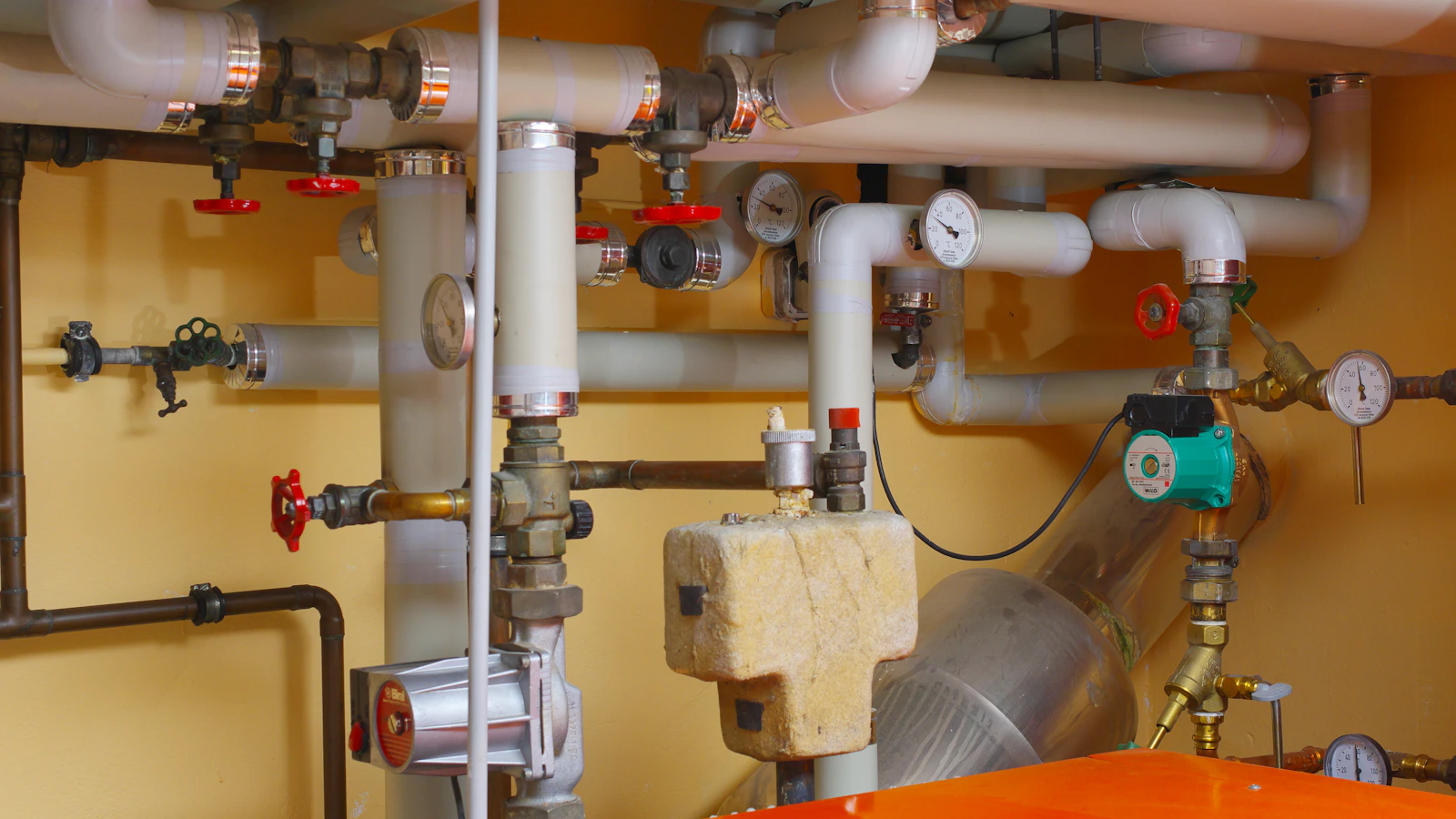
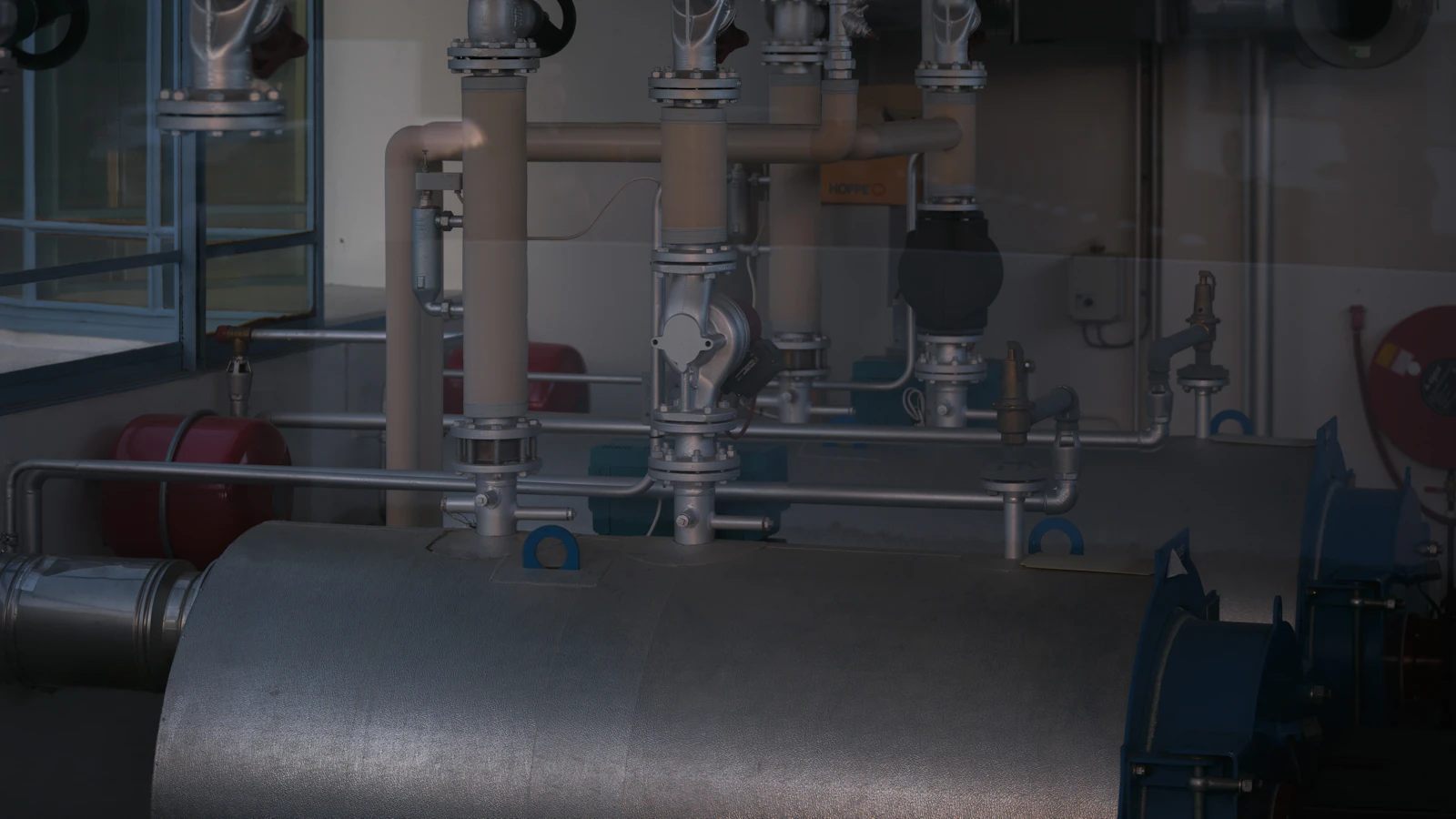
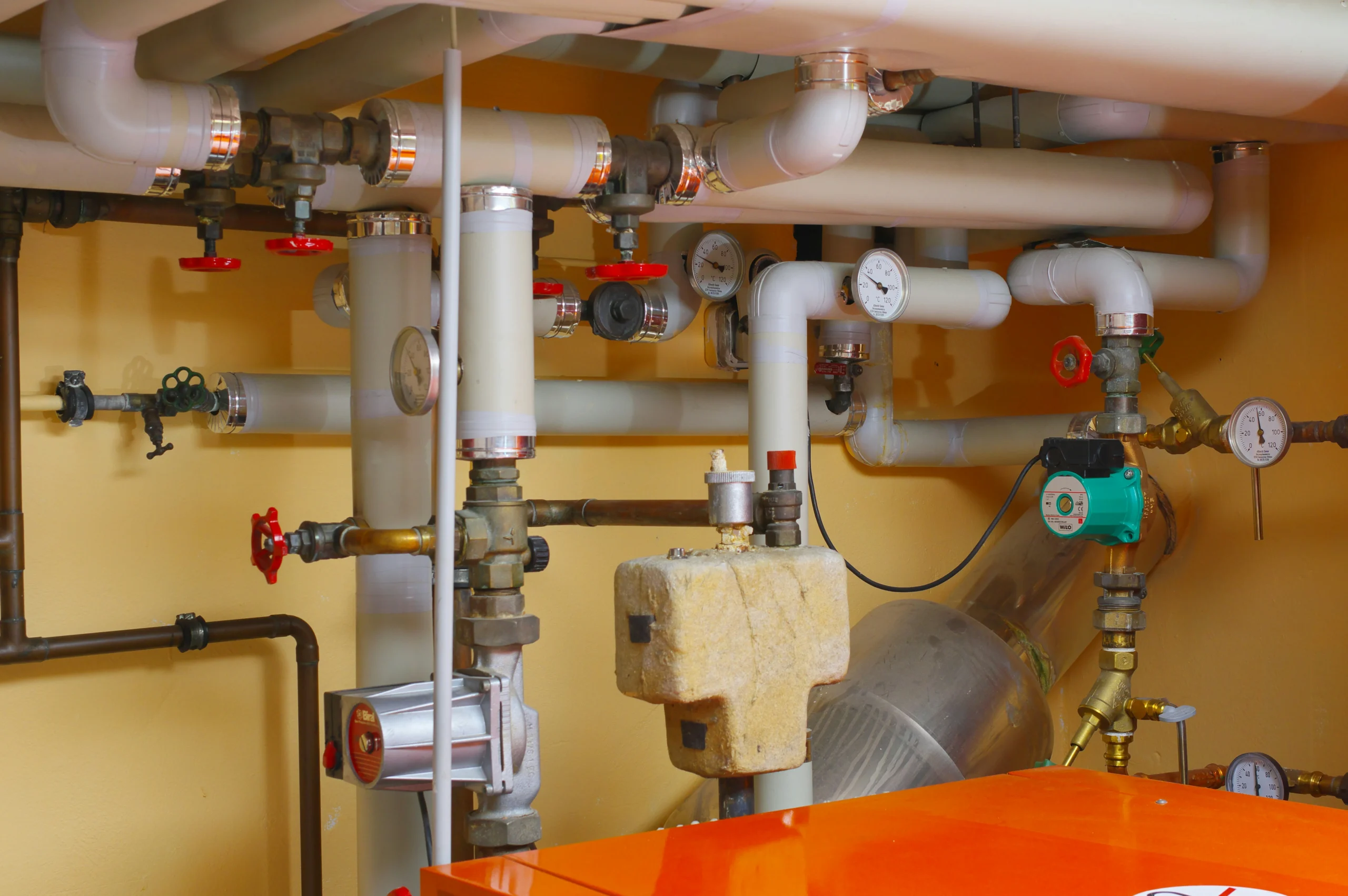
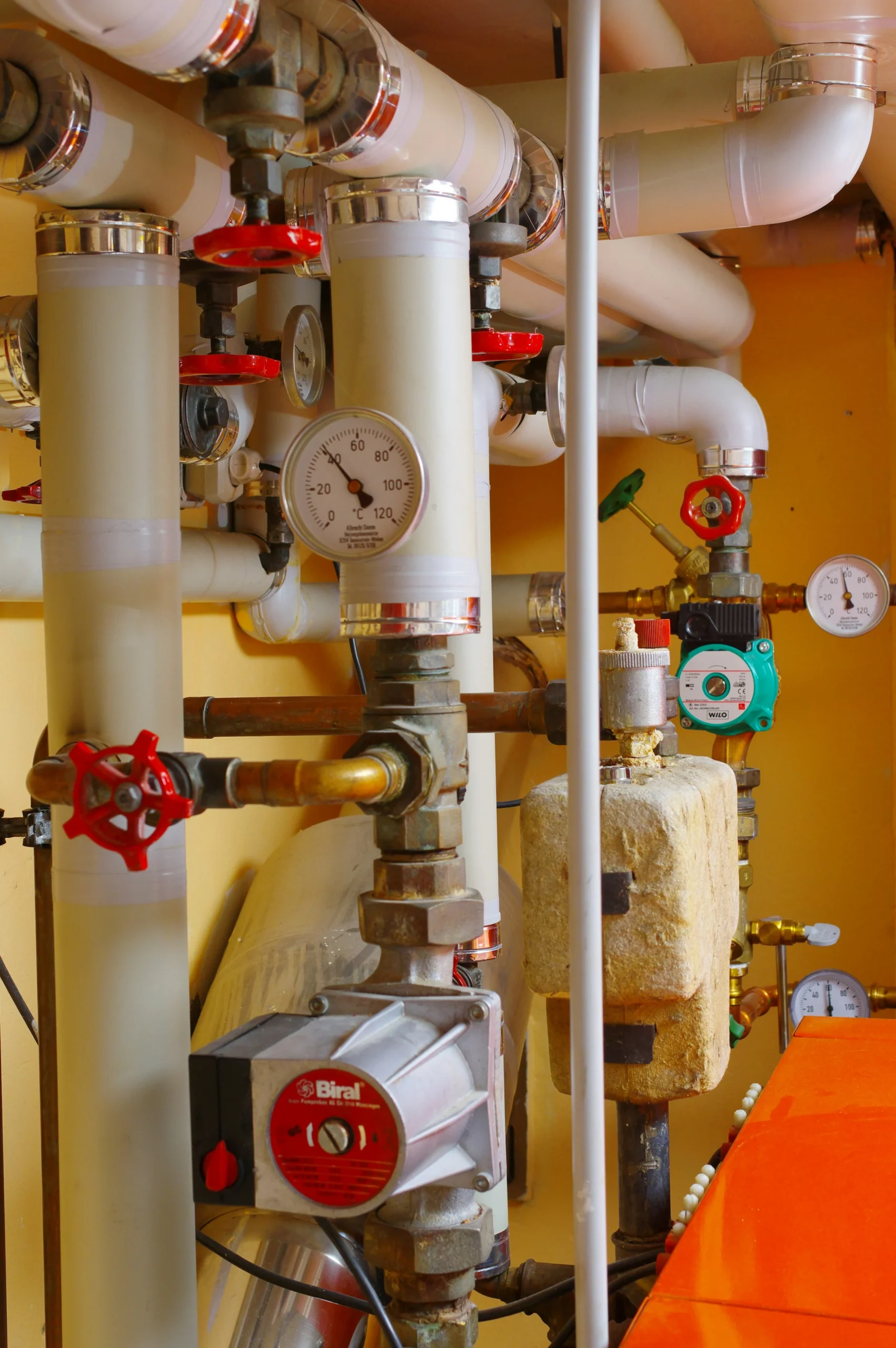
A typical home has a single boiler, often a combi, that heats water on demand and serves a handful of radiators. A commercial heating system is usually a set of connected parts, and a problem in any one of them can leave a building cold even when the boiler itself is healthy.
| Component | What it does | How a failure shows up |
|---|---|---|
| Boilers | Generate heat. Larger sites often run several boilers in a cascade or modular arrangement, sequenced by a controller. | Often reduced output if one boiler in a cascade fails; total loss of heat if a single boiler fails. |
| Circulating pumps | Move heated water around the building. Often installed as duty and standby pairs. | Boiler fires but heat does not reach radiators or heaters; boiler may overheat and shut down. |
| Pressurisation unit and expansion vessel | Keep a sealed system at the right pressure as water expands and contracts. | Low pressure lockout; repeated pressure loss points to a leak or a failed vessel. |
| Controls and BMS | Time clocks, optimisers, weather compensation and building management systems decide when and how hard the plant runs. | Plant does not run, runs at the wrong times, or one zone stays cold. |
| Flue and ventilation | Remove combustion products and supply air for combustion. | Safety shutdown if airflow or flue conditions fall outside limits. |
| Gas supply and safety controls | Meter, pipework and, in many plant rooms, emergency isolation and safety interlocks. | Boilers cannot fire, or a safety interlock has shut off the gas supply. |
Because of this, “the boiler has broken down” often means “the heating system has stopped working”, and the cause can sit anywhere in the chain. It is also why commercial heating system repair usually starts with the wider system rather than the boiler alone.
What are the most common causes of commercial boiler failure?
The 7 signs your commercial boiler needs repair covers the warning signs that appear before a failure. This section looks at the causes underneath them.
Frozen or blocked condensate pipes
Modern condensing boilers produce acidic condensate, which drains away through a condensate pipe. If an external or poorly insulated run freezes, the condensate backs up and the boiler shuts itself down. It is a well-known cold-weather fault on condensing plant.
Loss of system pressure
Sealed systems rely on stable water pressure. Leaks, failed expansion vessels, faulty pressure relief valves or a pressurisation unit fault can all drop pressure below the boiler’s safe operating limit, triggering a shutdown.
Pump failure
If water is not circulating, the boiler cannot shed its heat. Seized or worn pumps, failed motors and electrical faults on pump controls are typical causes, and pumps that have stood idle over summer can stick when they are restarted.
Ignition and flame detection faults
Every time a burner starts, it has to ignite and then prove that a flame is present. Worn ignition electrodes, contaminated flame sensors or faults on the burner control unit can stop that sequence, and the boiler will refuse to run.
Fan, air and flue faults
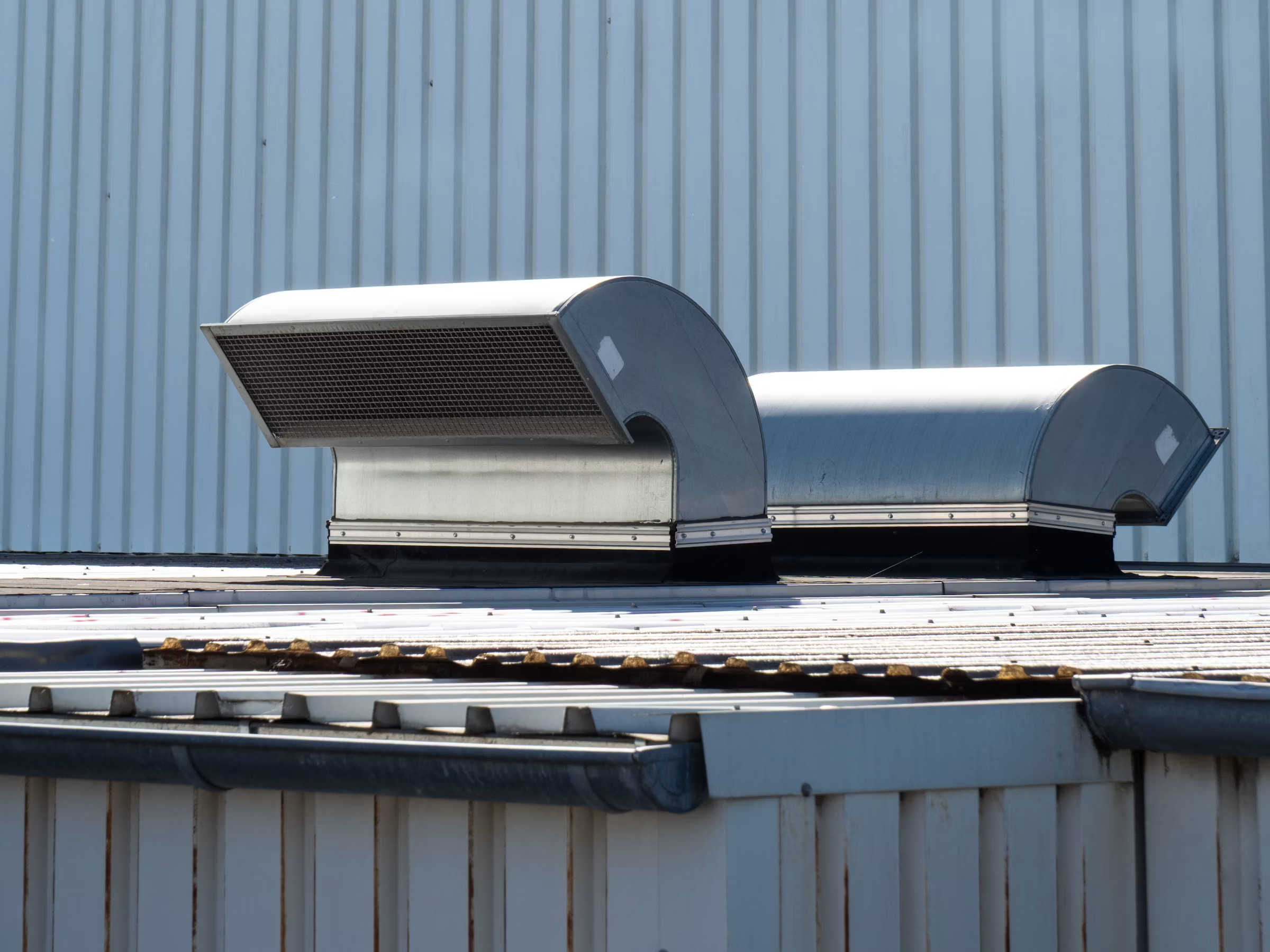
Most commercial boilers use a fan to supply combustion air and clear flue gases. A failed fan, a blocked air intake or a faulty air pressure switch will prevent safe combustion, so the boiler shuts down.
Scale, sludge and poor water quality
Over time, corrosion inside a heating system produces sludge (magnetite), and hard water can deposit limescale. Both restrict flow, reduce heat transfer and can cause heat exchangers to overheat or fail. Water treatment and system cleaning are designed to slow this process down.
Controls and BMS faults
A failed sensor, a time clock that lost its settings in a power cut, or a building management system that is no longer calling for heat can all leave a building cold while the boiler is in full working order.
Gas supply issues
Problems with the gas meter, regulator or supply pipework, or a safety interlock that has isolated the gas, will stop the boilers firing. These are gas-side faults and fall squarely within the work of a qualified gas engineer.
What do lockouts and fault codes actually mean?
A lockout is a safety state. The boiler’s control system monitors conditions such as flame, temperature, water flow, pressure and airflow. If any of them falls outside safe limits, it closes the gas valve and stops the boiler. Many lockouts need a manual reset before the boiler will try again.
In other words, a lockout is the boiler doing its job. It is designed to stop, for example, unburnt gas building up when a flame is not detected, or a heat exchanger overheating when water is not moving.
A fault code is the boiler’s way of recording why it stopped. Codes are specific to each manufacturer and often to each model. They point to the area of the problem rather than the root cause: a “no flame” code could stem from the ignition system, the gas supply, the flue or the condensate drain. Many commercial boilers also store a fault history, which engineers use to spot patterns.
Repeated lockouts are a sign of an underlying fault that a reset does not fix.
Who is legally allowed to work on a commercial gas boiler?
In Great Britain, the Gas Safety (Installation and Use) Regulations 1998 cover gas work in homes and in many workplaces, but they do not apply in the same way to every type of commercial or industrial premises. Regulation 3(1) sets out the basic principle: “No person shall carry out any work in relation to a gas fitting or gas storage vessel unless he is competent to do so.”
The HSE’s guidance for employers explains how this applies in practice. In workplaces such as shops, restaurants, schools and hospitals, work on gas fittings must be carried out by a Gas Safe registered engineer who is qualified to do the work, and it is illegal for anyone else to do it. In factories, mines, quarries, agricultural premises, construction site huts and sewage works, the requirement is instead for a competent person with the necessary training, skills, experience and knowledge. Where those premises include domestic, residential or sleeping accommodation, work on gas fittings in that accommodation still needs a suitably qualified Gas Safe registered engineer.
Gas Safe registration is not a blanket qualification. Each engineer’s ID card lists the types of gas work they are qualified for, and domestic and non-domestic (commercial) work are covered by separate qualifications. The HSE notes that it is the employer’s responsibility to check that an engineer is registered and qualified, which can be done through the Gas Safe Register or by phone on 0800 408 5500.
The same HSE guidance explains that employers must also make sure gas pipework, appliances and flues are regularly maintained.
When an engineer finds a dangerous situation, an industry procedure known as the Gas Industry Unsafe Situations Procedure sets out how it is classified and what action is taken. That can include turning off or disconnecting an appliance until it is made safe.
What does the law say about workplace temperatures?
Regulation 7(1) of the Workplace (Health, Safety and Welfare) Regulations 1992 states: “During working hours, the temperature in all workplaces inside buildings shall be reasonable.”
The regulation itself does not set a number. HSE guidance explains that the temperature in indoor workplaces should usually be at least 16°C, or 13°C for strenuous work. There is no legal maximum. Where a reasonable temperature cannot be kept throughout a workroom, the guidance refers to local heating as one option.
Heating failures can also affect hot water. A boiler breakdown does not automatically create a legionella hazard, but where boilers heat stored hot water, prolonged disruption to stored temperatures can compromise temperature-based legionella controls. The HSE explains how those controls work in its guidance on hot and cold water systems, and disruption of this kind is managed under the site’s legionella risk assessment.
This is one reason a winter breakdown can be more than an inconvenience in a commercial building: it can affect legal duties as well as comfort.
What happens during a commercial boiler repair?
When a breakdown is reported, engineers usually ask for a few details: the boiler make and model, any fault code shown on the display, when the boiler stopped, which areas of the building are affected, and whether hot water is also unavailable. That information helps them prepare and, in some cases, bring likely parts on the first visit.
Whether it is handled as a planned visit or as an emergency commercial boiler repair, a commercial repair usually follows a broadly similar sequence.
- Safety checks. The engineer confirms the plant and gas supply are in a safe condition before working on them.
- Diagnosis. This often involves reading the fault history and checking the wider system (pumps, pressure, controls, flue and gas supply), not just the boiler, because the cause can sit anywhere in the chain.
- Repair or parts. Some faults are fixed on the first visit. Others need parts that are specific to the make and model.
- Testing and recommissioning. Once repaired, the boiler is tested for safe operation, usually including a combustion analysis with a flue gas analyser, before it is returned to service.
Commercial repairs sometimes take more than one visit. Commercial boiler parts vary widely between manufacturers and models, so they are not always carried as van stock, and parts for older or discontinued boilers can take longer to source. During cold snaps, demand on heating engineers can also rise. On cascade systems, the remaining boilers can often keep running at reduced output while one is repaired.
Where repairs become frequent, the question of repair versus replacement comes into play. That decision is covered in commercial boiler repair or replacement, and what a new system involves is explained on the commercial boiler installation page.
How does planned maintenance reduce breakdown risk?
Planned preventive maintenance (PPM) replaces “fix it when it fails” with scheduled visits. For heating plant, that means commercial boiler servicing at intervals appropriate to the manufacturer’s instructions, operating conditions and site requirements, along with combustion checks and inspection of pumps, pressurisation units, expansion vessels, condensate routes, controls and water quality.
Maintenance does not eliminate breakdowns. What it does is find wear and developing faults while the plant is still running, ideally before the heating season starts, instead of on the first cold morning. It also builds a service history, which helps engineers diagnose faults faster when they do occur.
For more detail, see what a commercial boiler service involves, planned maintenance vs reactive repairs, what a commercial HVAC maintenance contract should include, the pre-winter commercial heating checklist, and how PPM contracts are structured.
Frequently asked questions
A lockout is a safety shutdown triggered when conditions such as flame, pressure, temperature or airflow fall outside safe limits. Repeated lockouts usually indicate an underlying fault, such as a condensate blockage, low system pressure, an ignition problem or a pump fault, that a reset does not cure.
The boiler itself is rarely the part that freezes. Condensate pipes, external pipe runs and pipework in unheated plant rooms or roof spaces are more vulnerable, and a frozen condensate pipe is a well-known reason for a condensing boiler to shut down in cold weather.
In Great Britain, the Workplace (Health, Safety and Welfare) Regulations 1992 require the temperature in indoor workplaces to be “reasonable” during working hours. HSE guidance says this should usually be at least 16°C, or 13°C for strenuous work. There is no legal maximum. Northern Ireland has its own, similar regulations.
No. Gas Safe registration lists the specific types of work each engineer is qualified for, and commercial (non-domestic) gas work needs the relevant non-domestic qualifications. In some premises, such as factories, the legal test is competence rather than registration, although any domestic, residential or sleeping accommodation on those sites still requires a suitably qualified Gas Safe registered engineer. The categories are shown on the engineer’s Gas Safe ID card and on the Gas Safe Register.
Commercial boiler parts are often specific to the manufacturer and model, so they may need to be ordered. Diagnosis can also uncover more than one fault across the wider heating system, and parts for older or discontinued boilers can take longer to find.
Servicing reduces the risk but cannot remove it entirely. Its value is in finding wear and developing faults early, keeping the plant running efficiently, and building a service history that makes future faults quicker to diagnose.